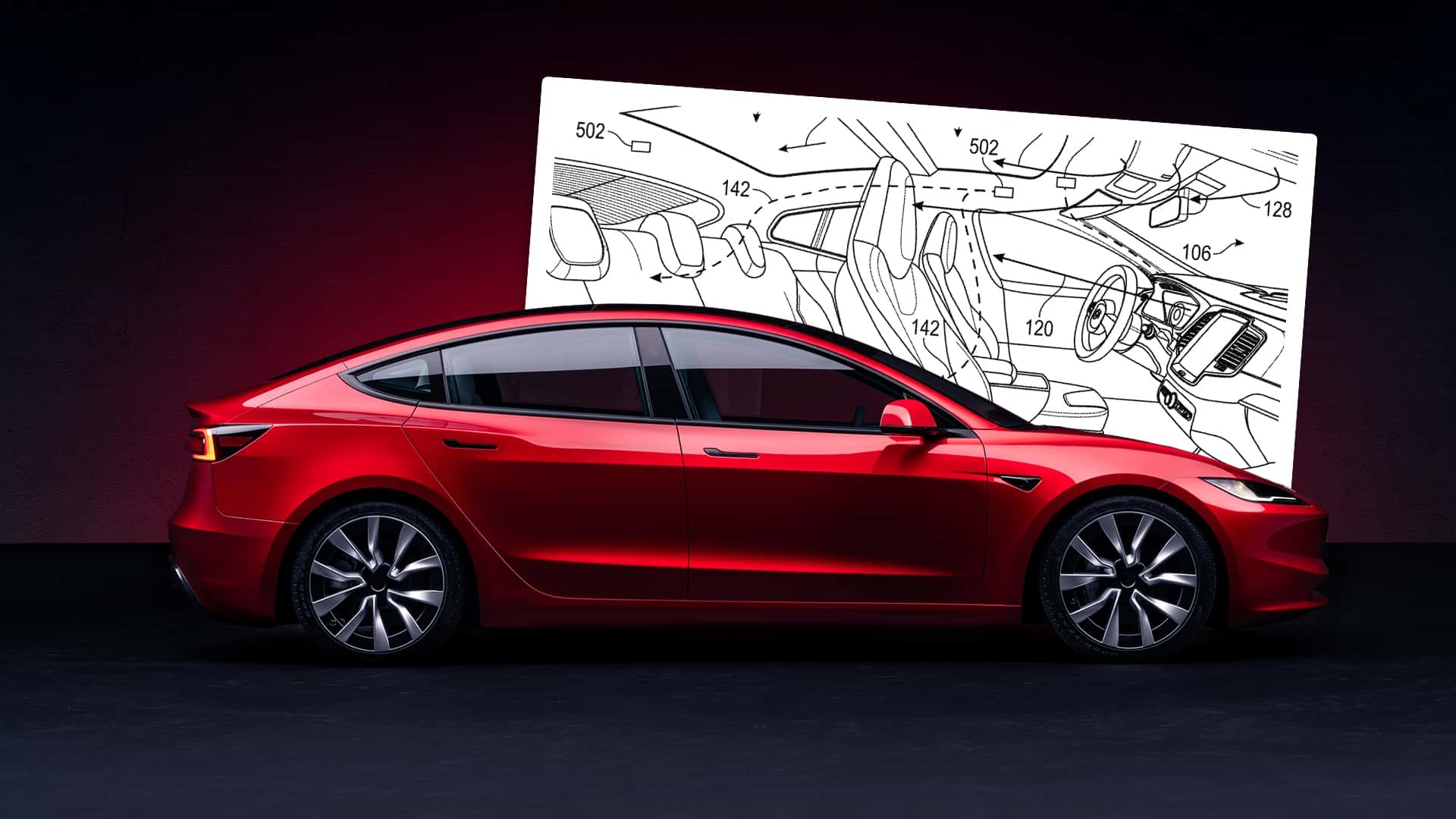
Vehicle interiors can get intensely hot, and managing their temperature—whether pre-cooling before you get in or maintaining comfort while driving—consumes a considerable amount of battery power, directly impacting driving range.
That's why one of Tesla's latest patents is so noteworthy. The invention suggests an innovative method for cooling a car's cabin by specifically targeting "hot air pockets" within the interior. Here's a closer look at how it works.
As detailed in the patent, Tesla's approach involves integrating a suction unit into the vehicle's HVAC (Heating, Ventilation, and Air Conditioning) system. This unit generates negative pressure, essentially creating a vacuum, which can then be directed to specific vents located near these hot air pockets. The superheated air is then drawn into the HVAC system, conditioned alongside the general cabin air, and recirculated back into the vehicle.
Solar radiation provides a clear illustration of this issue. The sun relentlessly beating down on a vehicle's glass roof is a primary culprit for cabin heat buildup—a sensation many have experienced when stepping into a parked car on a scorching day, or feeling the sun's warmth on an arm or leg during a long drive. Larger vehicles, like a Model X compared to a Model 3, inherently possess more surface area and cabin volume that demand thermal management.
 View Price on Amazon
However, Tesla's innovative concept aims to make this thermal conditioning process significantly more efficient. The patent outlines the goal: to "maximize thermal comfort and minimize energy consumption"—essentially, by selectively drawing air from areas that require cooling and then distributing the temperature more uniformly throughout the cabin.
Going a step further, Tesla's patent also specifies that this suction mechanism can be conditionally activated. This means it can sense the cabin temperature and engage the vacuum function only in the specific zones that require cooling, optimizing energy use.
This idea is undeniably quite innovative. Of course, as with any patent, there's no guarantee it will ever be implemented in a production vehicle. Nevertheless, it represents a clever strategy to enhance an EV's range without resorting to larger battery packs, aerodynamic tweaks, or significant powertrain modifications.
For instance, on a sweltering 100-degree Fahrenheit day, air conditioner usage can lead to a range reduction of up to 18%, according to a study by Recurrent. If Tesla's proposed method can effectively add more miles to its vehicles while simultaneously boosting passenger comfort, it truly would be a win-win scenario.
Source: insideevs.com

