At **85 mph**—the legal maximum speed limit in the United States—the **Ford F-150** carries immense kinetic energy. While modern engineering has made pickups more agile, the laws of physics remain unchanged. Understanding how weight, **tire air pressure**, and rubber compounds interact at highway speeds is the difference between a safe stop and a dangerous collision.
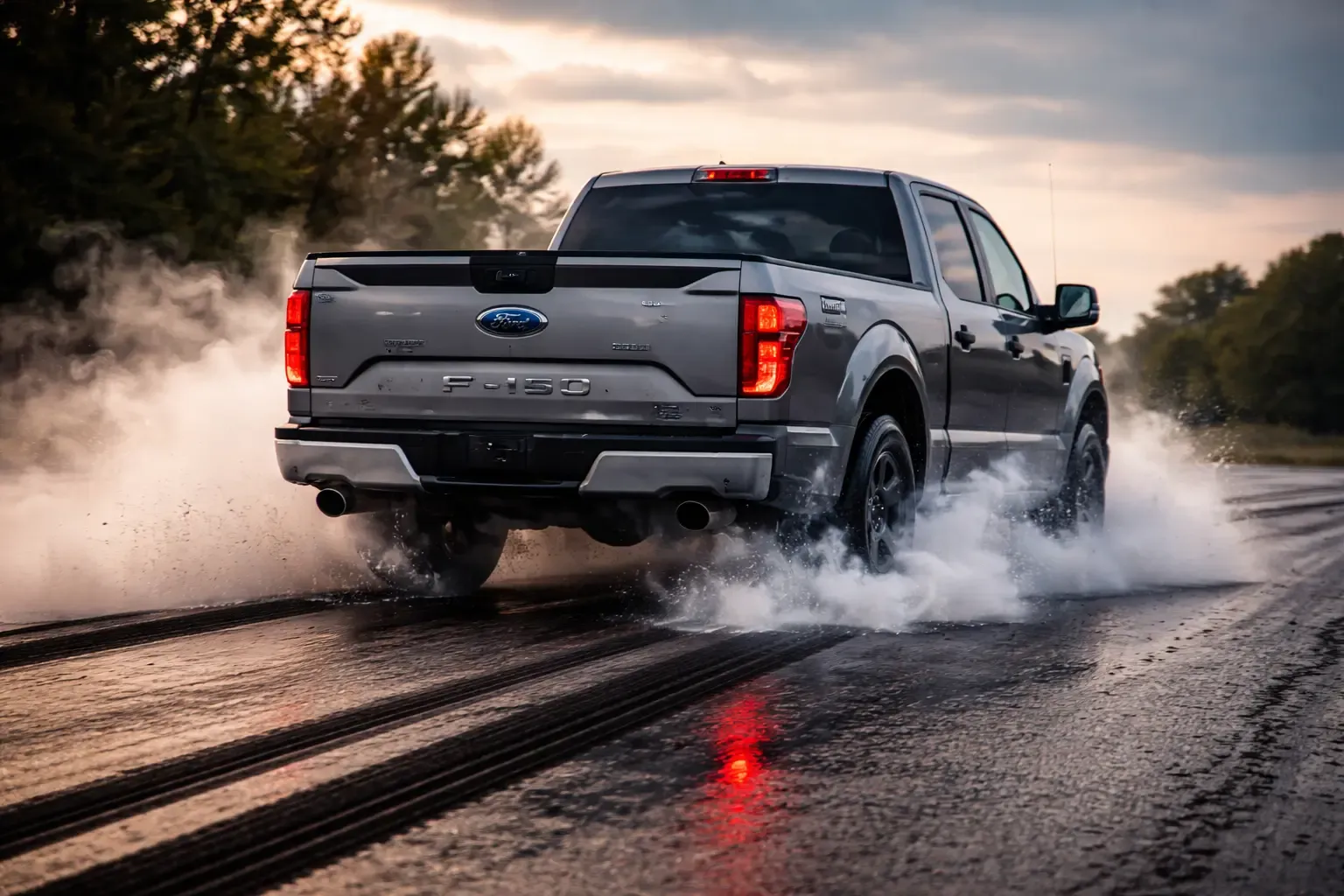
1. The Weight Factor: Fuel and Payload Mass
A 2026 Ford F-150 Crew Cab has a curb weight of approx. **5,500 lbs**. However, real-world operating mass is significantly higher. To understand **how to check tire pressure** for maximum safety, you must account for the actual load on the tires.
Mass Calculation for a Loaded F-150:
• Base Curb Weight: 5,500 lbs
• 36 Gallons of Fuel (6.1 lbs per gallon): ~220 lbs
• Passengers & Personal Gear: ~510 lbs
TOTAL OPERATING MASS: 6,230 lbs
• Base Curb Weight: 5,500 lbs
• 36 Gallons of Fuel (6.1 lbs per gallon): ~220 lbs
• Passengers & Personal Gear: ~510 lbs
TOTAL OPERATING MASS: 6,230 lbs
At **85 mph**, a 6,230 lb vehicle covers **124.6 feet per second**. The kinetic energy that your brakes must convert into heat is nearly **1.5 million foot-pounds**. Every PSI in your tires counts when managing this much force.
2. 85-0 MPH Stopping Distance Comparison
Stopping a heavy truck requires a perfect contact patch. This is governed by your **psi tire pressure**. If your tires are below the **recommended tire pressure**, the sidewalls flex excessively, increasing heat and causing the braking distance to skyrocket.
Braking Performance by Tire Type (Total 6,230 lbs)
⚠️ Driver Safety Advisory
Always choose a speed that is appropriate for the current weather conditions and visibility. Even with the best tires, rain or fog can double these stopping distances. Speed limits like 85 mph are for ideal conditions only.
3. The Critical Role of TPMS and Sensors
Your **TPMS (Tire Pressure Monitoring System)** is your first line of defense. A faulty **tire pressure sensor** isn't just a dashboard annoyance; it masks dangerous underinflation. At 85 mph, a **low tire pressure** situation can lead to rapid heat buildup and tire failure.
When the "Tire Pressure Light" Comes On
If your **low tire pressure light** illuminates on the highway, slow down immediately. Braking distance increases by roughly **12% for every 5 PSI lost**. If the **tire pressure monitor** alerts you, use a professional **tire pressure gauge** at the next safe stop to verify your **psi tire pressure**.
🔥 Upgrade to Heavy-Duty Braking Kits4. Seasonal Fluctuations: Cold Tire Pressure
In winter, **winter tire pressure** can drop significantly overnight. This drop can trigger your **tire sensor** even if there is no leak. Always adjust to the **recommended** PSI when the tires are "cold" to ensure the tread makes full contact with the pavement during high-speed stops.
🚨 THE 85 MPH REALITY:
Reaction time at 85 mph (approx. 1.5 seconds) means you travel **187 feet** before your foot even hits the brake. Combined with a 345-foot braking distance, your total stopping gap is over **530 feet**—nearly two football fields.
5. High-Speed Maintenance Checklist
- System Calibration: Know **how to reset tire pressure light** settings after every rotation or inflation.
- Sensor Integrity: Replace any failing **tire pressure sensor** to maintain the **tpms** safety net.
- Emergency Prep: If a warning persists, search for **"tire pressure near me"** to address potential slow leaks before they become blowouts.
- Check tire pressure: Use a high-quality **tire pressure gauge** before long highway hauls.
In summary, your **Ford F-150** is only as safe as its tires. Maintain your **tire pressure sensors**, follow the **recommended tire pressure**, and never underestimate the distance required to stop a 3-ton truck from 85 mph. Always adjust your speed to match visibility and weather conditions.