The Ultimate Tire Buying Guide: Everything You Need to Know
Everything you ever needed to know about the only four points of contact between your car and the road.
1. Decoding the Sidewall: It's Not Math, It's a Map
Ever looked at your tire and seen something like P225/65R17 102H? It looks like a secret code, but once you break it down, it tells you exactly what your car can handle.
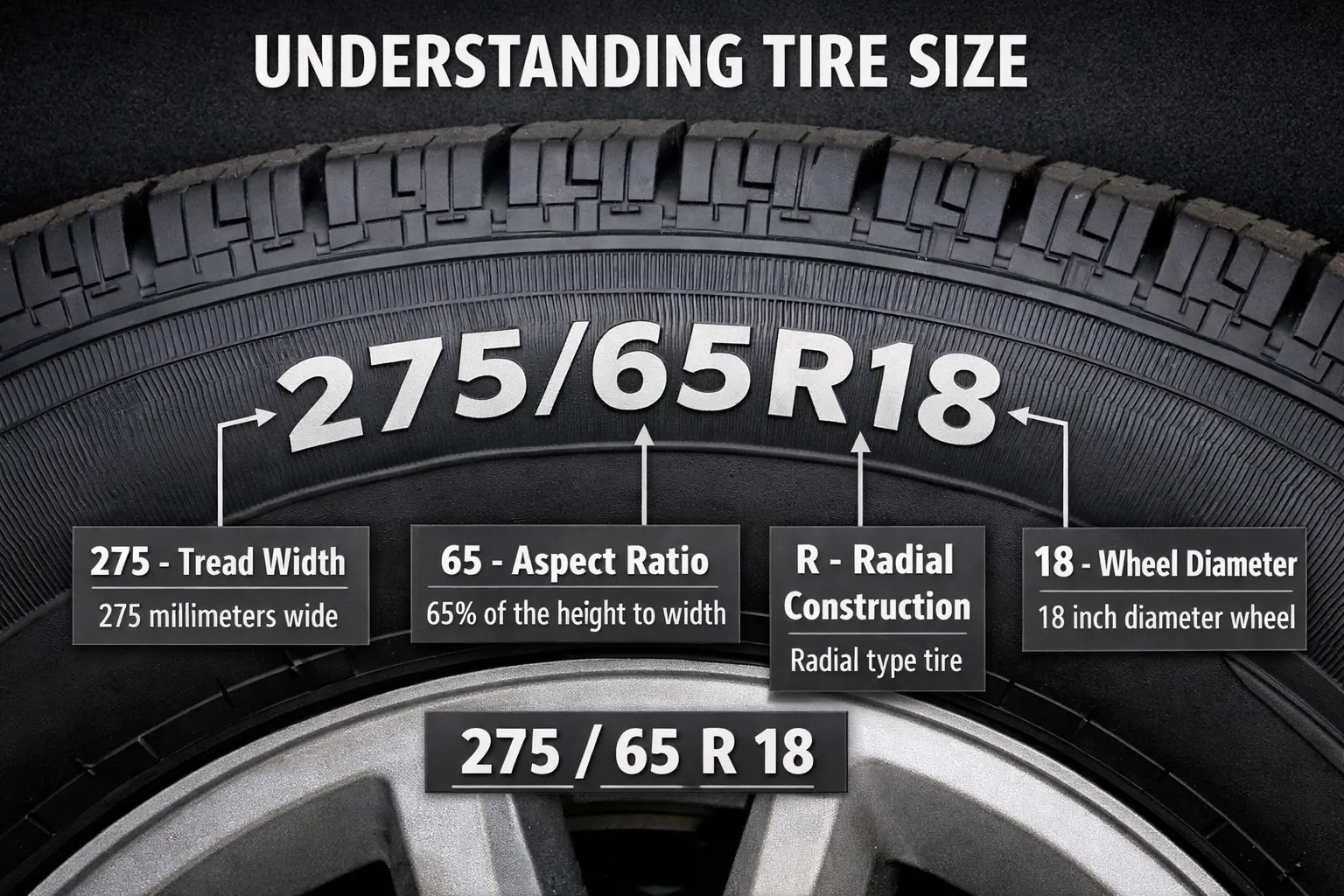
P - Passenger Vehicle (LT would be Light Truck)
225 - Width of the tire in millimeters.
65 - Aspect Ratio. The height is 65% of the width.
R - Radial construction (Industry Standard).
17 - Wheel diameter in inches.
102H - Load Index and Speed Rating (H = up to 130 mph).
2. The Big Three: Summer, Winter, or All-Season?
Choosing the right rubber for your climate is the difference between a controlled stop and a sliding accident. In the US, 70% of drivers rely on All-Season tires, but are they right for you?
All-Season Tires
The "Jack of all trades, master of none." Designed to handle wet and dry roads, and light snow. They offer a long tread life and a quiet ride.
Summer (Performance) Tires
Made of soft rubber compounds that "stick" to the pavement when temperatures are above 45°F. They offer the best braking distances but turn hard like plastic in freezing weather.
Winter (Snow) Tires
Deep grooves and sipes designed to bite into ice and snow. Pro Tip: If you can see your breath, you should be on winter tires. They are not just for snow; they are for cold.
3. SUV & Truck Focus: AT vs. HT
If you drive a truck like a Silverado, F-150, or a Jeep, you have a specific choice to make regarding the tread pattern:
- Highway Terrain (HT): Quiet, long-lasting, better fuel economy. Perfect for the daily commute.
- All-Terrain (AT): Aggressive look, handles mud and gravel, but can be noisier on the highway.
Looking for the quietest ride?
We tested the top tires for highway comfort. Don't let a loud tire ruin your road trip.
Read the Quiet Tire Guide4. The Maintenance Routine that Saves Thousands
Tires are an investment. If you treat them like a "set and forget" item, you are throwing money away. A set of Michelins can last 6 years or 3 years depending on this:
Rotation (Every 5,000 - 7,000 miles)
Front tires wear differently than rear tires (especially on FWD cars). Swapping them ensures they wear down at the same rate.
Alignment
If your car pulls to one side or the steering wheel isn't centered, your alignment is off. This can "eat" a brand new tire in less than 5,000 miles.
5. When to Replace: The Penny Test
You don't need fancy tools to know if your tires are bald. Take a standard Lincoln Penny:
- Insert the penny into a tread groove with Lincoln's head upside down.
- If you can see all of Lincoln's head, your tread is below 2/32" and it's illegal and unsafe.
- If part of his head is covered, you still have life left.

6. Buying Tips: How to Save $200+
Never walk into a tire shop without doing your homework. Here is how to win:
- Buy in Pairs or Fours: Never replace just one tire; it upsets the vehicle's balance and ABS systems.
- Check the DOT Date: Tires age even if they aren't driven. Look for the 4-digit code (e.g., 1225 means 12th week of 2025). Don't buy "new" tires older than 2 years.
- Shop Online: Use sites like Amazon or Tire Rack to compare prices, then ask your local shop to price-match.
Need a precision gauge?
Gas station pumps are notoriously inaccurate. Keep a professional gauge in your glovebox.
View Top Rated Gauges on Amazon