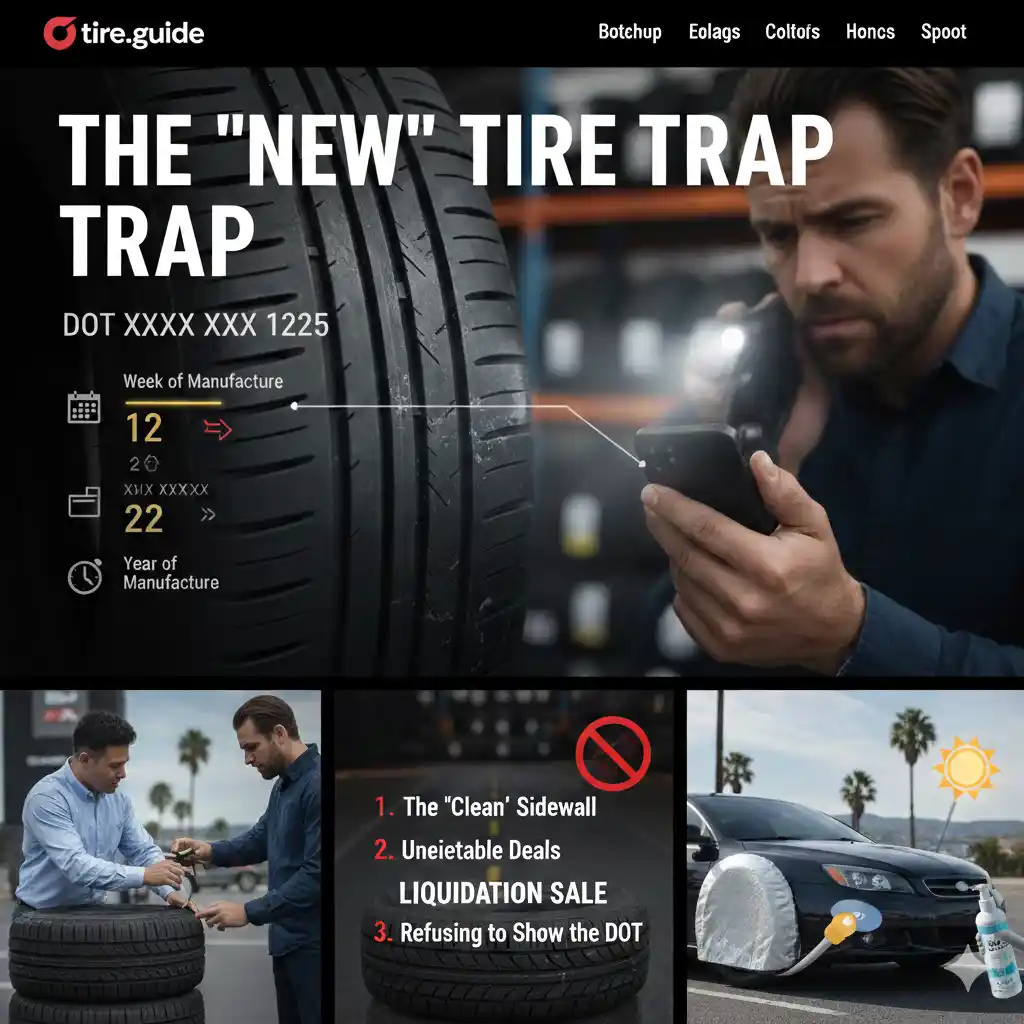
Imagine walking into a dealership, paying $800 for a fresh set of premium tires, and driving off feeling safe. Now imagine that those tires, despite having zero miles on them, have been sitting in a humid warehouse since 2021. In the eyes of safety experts, you didn’t buy new tires—you bought ticking time bombs.
The Reality of "New Old Stock"
Rubber is an organic compound. Like a loaf of bread or a bottle of milk, it has an expiration date. From the moment a tire is cured at the factory, its chemical structure begins to break down through a process called oxidation. In the USA, there are no federal laws preventing retailers from selling tires that have been sitting on shelves for years as "brand new."
How to Read the DOT Code (Your Secret Weapon)
To avoid the trap, you must look at the sidewall. Every tire sold in the US has a DOT (Department of Transportation) code. The last four digits are the most important numbers you will ever read on your car.
Decoding the Date:
Example: DOT XXXX XXXX 1225
- 12: The week of manufacture (12th week of the year).
- 25: The year of manufacture (2025).
If those last numbers say 1820, that tire was made in mid-2020. Even if it looks shiny, the rubber is already 6 years old!
Why Age Matters More Than Tread
Even if a tire has 100% tread depth, old rubber becomes brittle. This leads to "dry rot," where tiny cracks form in the sidewall and between the tread blocks. At highway speeds (especially at the US standard of 70-80 mph), the heat can cause the tread to delaminate, leading to catastrophic blowouts.
Professional Tip: Always carry a portable tread depth and pressure gauge to inspect your tires regularly.
Get a Pro Inspection Tool on Amazon3 Signs a Retailer is Trying to Scam You
- The "Clean" Sidewall: Retailers often use heavy tire shine (silicone-based) to hide tiny dry rot cracks on old stock.
- Unbeatable "Closeout" Deals: If a premium Michelin or Bridgestone is 40% cheaper than everywhere else, check the DOT code immediately. It’s likely 4+ year old stock.
- Refusing to Show the DOT: If a shop won't let you see the tires before they mount them, walk away.
What Should You Buy Instead?
To ensure you get the freshest rubber, look for high-turnover models. The most popular 2026 All-Season tires are usually fresh because they sell out faster than they can be stocked.
Top-Rated Fresh Stock for 2026:
If you're looking for the best performance and guaranteed fresh manufacturing tech, check these out:
Shop Michelin Pilot Sport 4SShop Continental ExtremeContact
The 6-Year Rule
Most major tire manufacturers (and the NHTSA) recommend replacing tires every 6 years, regardless of tread wear. If you buy a tire that is already 4 years old, you only get 2 years of safe use before you need to replace them again. You aren't saving money; you're losing it.
Conclusion
Don't be a victim of the New Tire Trap. When you go to the tire shop, be the customer who checks the DOT code. Tell the manager: "I'm not accepting anything older than 6 months." It is your money, your car, and your family's safety on the line.