⚠️ The Tread Trap
Fact: A tire can have 100% perfect tread depth and still be deadly. If you only check your tread, you are ignoring the most critical safety factor: Age.
Imagine driving at 70 mph on the highway. Your tires look great; plenty of tread left. Suddenly, without warning, a rear tire disintegrates. The tread separates from the casing, sending your vehicle into an uncontrollable spin.
This scenario happens thousands of times a year. The cause isn't a nail or a pothole—it's tire expiration. Tires are not like fine wine; they do not get better with age. They are more like milk; they have a definite shelf life, and using them past that date is a gamble with your life.
In this 2026 guide, we will teach you the simple 4-digit code that reveals the true age of your tires, and why the "10-Year Rule" might be too risky.
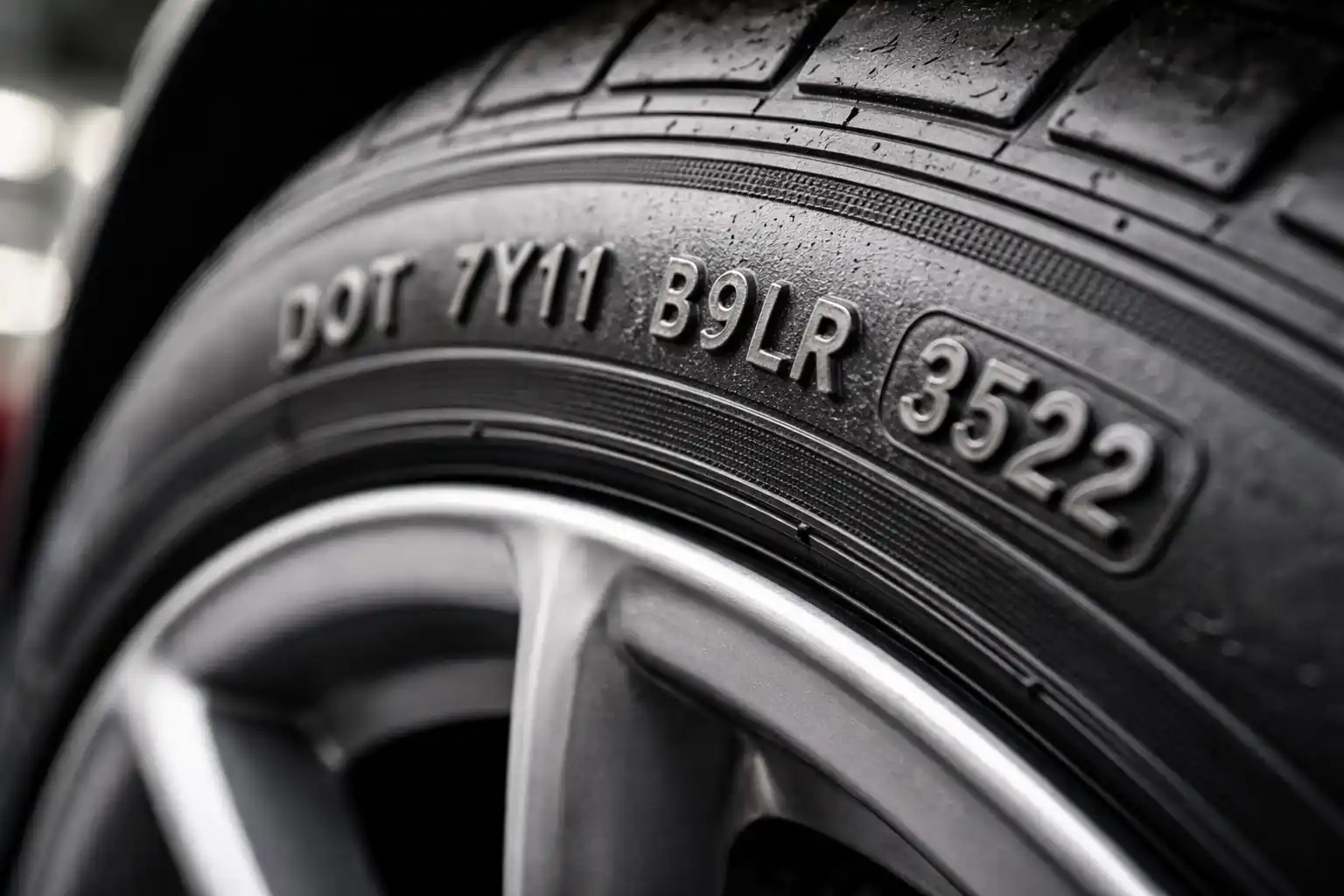
Step 1: Find the DOT Code
Every tire sold in the United States since 2000 must have a DOT (Department of Transportation) identification number branded onto the sidewall. It begins with the letters "DOT".
Following "DOT" is a series of 8 to 13 letters and numbers that identify the manufacturing plant and tire size. You can ignore these for now.
What you are looking for are the LAST FOUR DIGITS representing the date. These are usually enclosed in a small oval stamp near the rim edge. Note: You might only find this full code on one side of the tire (often the inner side), so you may need to crawl under the car with a flashlight.
Step 2: Crack the 4-Digit Code
Once you find the four numbers at the end of the DOT string, decoding them is simple.
- The first two digits represent the WEEK of manufacture (01 to 52).
- The last two digits represent the YEAR of manufacture.
Examples for 2026:
4225
This tire was made in the 42nd week of 2025.
(Late October 2025). This is a fresh, safe tire.
1116
This tire was made in the 11th week of 2016.
(March 2016). This tire is nearly 10 years old and is extremely dangerous.
If you find a tire with only a 3-digit code (e.g., "359"), it means the tire was manufactured before the year 2000. Do not drive on this tire. Replace it immediately.
Why Do Tires "Expire"? The Chemistry of Failure
You might wonder, "If the tread is good, why is the tire bad?"
Rubber is an organic material. Just like a rubber band that sits in a drawer for five years gets brittle and snaps when you stretch it, tire rubber degrades over time. This process is called thermo-oxidative degradation.
The Invisible Enemies:
- Oxygen: Even from the inside out, oxygen attacks the chemical bonds in the rubber, making it harder and less flexible.
- Heat: High temperatures accelerate the chemical breakdown. Tires in Arizona or Florida age much faster than tires in Maine.
- UV Rays: Sunlight attacks the exterior sidewalls, causing those fine "spiderweb" cracks you often see (known as weather checking or dry rot).
The Danger: As the rubber loses flexibility, it can no longer handle the immense forces of highway speeds. The internal steel belts can separate from the rubber tread. This catastrophic tread separation usually happens at high speed and results in a blowout.
The "6-Year Rule" vs. The "10-Year Limit"
There is no single law stating when a tire expires, but industry experts have clear guidelines.
The 6-Year Recommendation (The Safe Bet)
Many automakers (including Ford, Nissan, and Mercedes-Benz) and leading tire manufacturers recommend inspecting tires regularly after 5 years and strongly consider replacing them after 6 to 7 years, regardless of tread depth, especially in hot climates.
The 10-Year Absolute Maximum
Almost every expert agrees: Never drive on a tire older than 10 years. Even if it looks brand new, the internal structure is compromised. It is a ticking time bomb.
🔧 The Forgotten Danger: Your Spare Tire
When was the last time you checked your spare? It might have 0 miles on it, but it could be 15 years old, baking in the heat under your trunk. A 15-year-old spare will likely fail the moment you put a load on it. Check your spare tire's DOT date today!
Common "Death Traps" to Avoid
1. The Used Car Special
You buy a low-mileage, 8-year-old "garage queen" car. The tires have amazing tread because the car was rarely driven. The dealer shines up the sidewalls with tire gloss. Those tires are 8 years old and have dried out from lack of use (tires need to roll to keep internal waxes moving to the surface). Check the dates before you buy used vehicles!
2. "New Old Stock" Online
Sometimes you see an incredible deal on eBay or a shady website for brand new tires at 50% off. Be careful. These might be "New Old Stock"—tires that sat in a warehouse for 4 years before being sold to you. By the time you get them, half their safe life is gone. Always buy from reputable dealers who turn over inventory quickly.
3. RVs and Trailers
Recreational vehicles and boat trailers are notorious for tire blowouts. They often sit idle for 11 months of the year, rotting in the sun, and are then overloaded for a summer road trip. If you own a trailer, replace tires every 5-6 years strictly based on age, not tread.
Conclusion: Action Required
Go outside right now with your phone flashlight. Find the DOT codes on all four of your tires (and your spare). Do the math.
If your tires are approaching 6 years old, start budgeting for a new set. If they are over 8-10 years old, do not drive on the highway until they are replaced. The cost of four new tires is far less than the cost of an accident.
Don't risk your family's safety on expired rubber. Find fresh tires from top brands below.
Shop for FRESH Tires Now (Amazon)Make sure you also have a good gauge to check physical wear:
Get a Digital Tread Depth Gauge