The "Empty Trunk" Scandal: Why Tire Goo Can't Save You
Imagine this: It is 11:00 PM on a rainy highway. You hit a massive pothole and hear the dreaded metallic "CLANG" followed by a violent vibration. You pull over, open the trunk to grab the spare tire, and lift the floor mat. Your heart sinks. There is nothing there but a cheap plastic compressor and a can of "sealant goo." You are now part of a growing statistic.
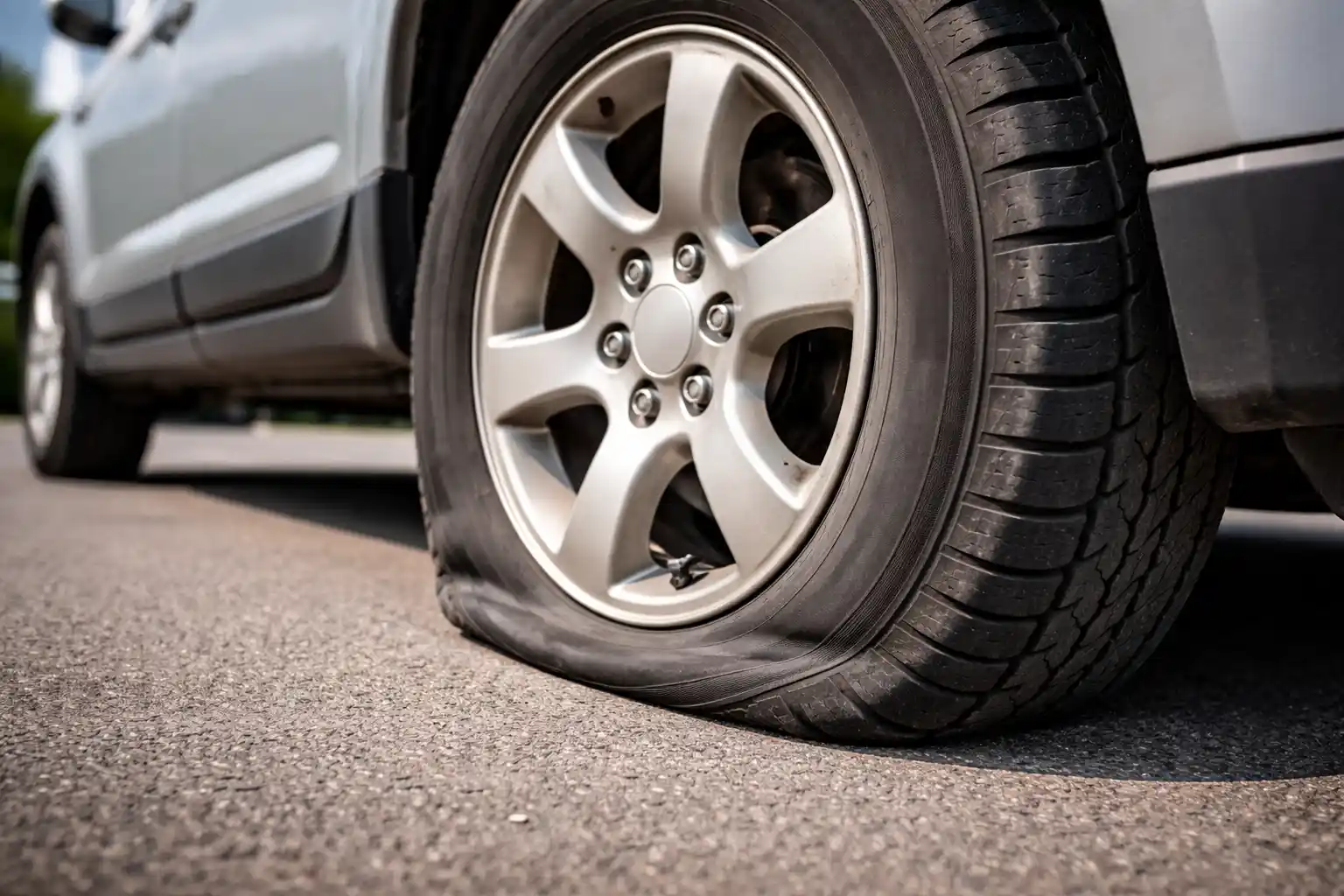
The Statistics of Failure
According to AAA, nearly 35% of new cars sold in 2026 do not come with a spare tire. The reason isn't trunk space; it is government regulations and corporate cost-cutting. Manufacturers save roughly $150-$200 per vehicle and shave off 40 lbs to meet strict CAFE fuel standards.
But here is the critical data point they don't tell you: Tire mobility kits (sealant) have a 40-50% failure rate in real-world scenarios.
Why the "Goo" is Often Useless
The liquid sealant provided in your trunk is designed for one specific scenario: a small, clean puncture (like a nail) in the center of the tread. It works by centrifugal force, coating the inside of the tire.
However, modern road damage is rarely that polite. When you hit a deep pothole or curb:
- Sidewall Tear: The rubber splits on the side. Liquid sealant cannot plug a vertical tear; it just pools at the bottom.
- The "Rim Pinch": The tire compresses fully, and the metal rim slices through the inner liner.
- Bent Wheel: The rim itself deforms, breaking the airtight seal (the bead) between tire and metal. No amount of goo can fix a bent piece of aluminum.
⚠️ The Sensor Killer:
Even if the sealant works temporarily, the chemical "slime" usually destroys the Tire Pressure Monitoring System (TPMS) sensor inside your wheel. Using that $20 emergency kit could cost you $150 later to replace the sensor and clean the hardened glue off the rim.
This leaves millions of drivers vulnerable. Without a spare, your only option is a tow truck. In rural areas, wait times can exceed 4 hours. Worse, if your rim is bent, a tire shop can't just "put a new tire on." You need a new wheel.
Shop Heavy Duty Compressors