The 2027 Power Play: Why Solid-State Batteries are the "Final Boss" of the EV Revolution
For years, the American driver has held onto a few stubborn (and valid) reasons for skipping the EV transition: range anxiety, long charging stops, and the fear of battery fires. But as we look toward the 2027 model year, the industry is preparing to deploy a technology that doesn't just improve the electric vehicle—it fundamentally re-engineers it.
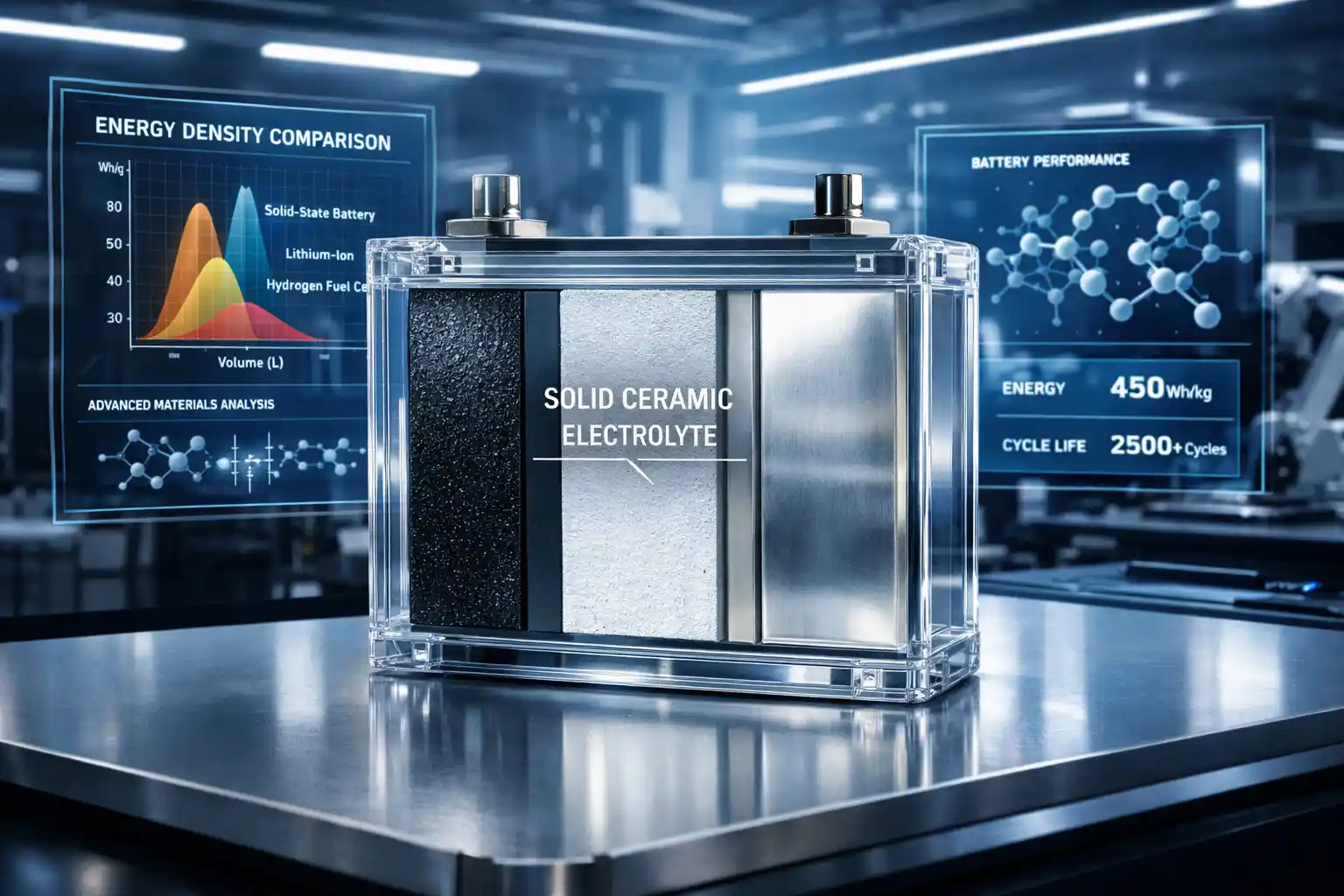
We are talking about All-Solid-State Batteries (ASSB). If the lithium-ion battery was the "dial-up internet" of the automotive world, solid-state is the fiber-optic jump we’ve been waiting for. This technology eliminates the volatile liquid electrolyte found in current Tesla or Ford packs, replacing it with a stable solid core that promises to unlock performance metrics previously thought impossible.
Chapter 1: Why 2027 is the Magic Number
While we’ve heard "it’s five years away" for a decade, the timeline has finally solidified. Giants like Toyota (with their massive R&D hub in Michigan) and Samsung SDI have locked in 2027 for their initial commercial production runs. This isn't just lab talk anymore; it’s about factory tooling and supply chain finalization.
For the U.S. market, this is critical. We drive longer distances, we tow trailers, and we face extreme temperature swings from the Alaskan tundra to the Arizona desert. Traditional liquid-electrolyte batteries struggle in these conditions. Solid-state, however, uses a solid ceramic or polymer separator that stays stable whether it's -40°F or 150°F.
📈 Performance Metrics: A Comparative Deep Dive
To understand why the 2027 shift is massive for dealerships and tire shops alike, look at how the specs stack up against the current "Gold Standard" (like the Tesla Model 3 or Ford F-150 Lightning cells):
| Feature | Current Li-ion (2024-25) | Solid-State (Target 2027) | Impact on American Drivers |
|---|---|---|---|
| Range (Standard SUV) | 250 - 330 miles | 600 - 750+ miles | Cross-state trips without stopping. |
| 0-80% Charge Time | 25 - 45 minutes | < 10 minutes | Roughly the time of a gas station fill-up. |
| Energy Density | ~250-300 Wh/kg | 500+ Wh/kg | Half the weight for the same range. |
| Safety Profile | Flammable liquid electrolyte | Non-flammable solid core | Significant reduction in "thermal runaway" risk. |
| Towing Capacity | Heavy range loss (50%+) | Minimal impact | Better weight-to-power ratio for trucks. |
Chapter 2: The "Tire and Chassis" Perspective
As an automotive or tire professional, you might wonder: How does a battery change my business? The answer is Unsprung Mass and Torque. Solid-state batteries are significantly lighter. Current EVs are "tire killers" because they weigh 30% more than their gas counterparts. A 2027 solid-state SUV will be lighter, which might actually increase tire longevity.
However, the instant torque will be even more aggressive. We will likely see a new generation of "SS-Rated" tires designed specifically for the high-friction demands of these lighter, ultra-powerful vehicles. Technicians will need to adjust alignment specs and wear expectations as vehicles shed hundreds of pounds of "battery fat" while gaining sports-car acceleration.

Maintain Your Current Tech
As we bridge the gap to 2027, keeping your current 12V and EV auxiliary systems healthy is vital. This smart maintainer is compatible with Lead-Acid, AGM, and Lithium-ion systems.
View on Amazon.comChapter 3: The "Human" Element – It’s About Trust
Beyond the numbers, the 2027 revolution is about winning over the skeptic. When a customer can buy a Silverado EV that gets 700 miles on a charge and fills up in the time it takes to grab a Starbucks, the "convenience gap" between gas and electric vanishes. Trust is built on reliability, and a non-flammable battery that doesn't lose half its range in a Chicago winter is the ultimate trust-builder.
Chapter 4: Critical Engineering Questions
Despite the hype, as professionals, we must ask the tough questions before these hit our service bays in 2027:
- The Repairability Paradox: With solid-state's high-pressure construction, will these be "one-and-done" units? If a single module fails, are we looking at a $25,000 total replacement because they can’t be opened?
- Manufacturing "Micro-Cracks": Solid ceramics are brittle. How will they handle the vibrations of a 3/4-ton truck on a gravel road in Montana? Will thousands of miles cause micro-fractures in the electrolyte, leading to premature failure?
- The Cold-Start Myth: While safer in heat, ionic conductivity in solids traditionally drops in freezing temperatures. Will these cars need massive "pre-conditioning" heaters just to move in a Minnesota winter?
- The Supply Chain Bottleneck: Most designs require significantly more processed Lithium. Is there enough high-purity lithium available by 2027 to make this more than a "luxury-only" toy?
🏁 The Bottom Line for 2027
Solid-state technology represents the "End Game" for the internal combustion engine's dominance. By solving range, safety, and charging speed simultaneously, 2027 will mark the year the EV becomes a no-compromise choice for the average American family.
Stay ahead of the curve. Read more technical deep-dives in our tire guide tech hub.