Rolling Resistance: The Hidden Force Draining Your Tank
In 2026, the battle for fuel economy isn't just under the hood—it's where the rubber meets the road. "Rolling Resistance" accounts for up to 20-25% of a vehicle's total energy consumption. For EV owners, this figure is even higher. In this definitive guide, we dissect the physics of Low Rolling Resistance (LRR) tires and why they are the smartest investment for high-mileage drivers.
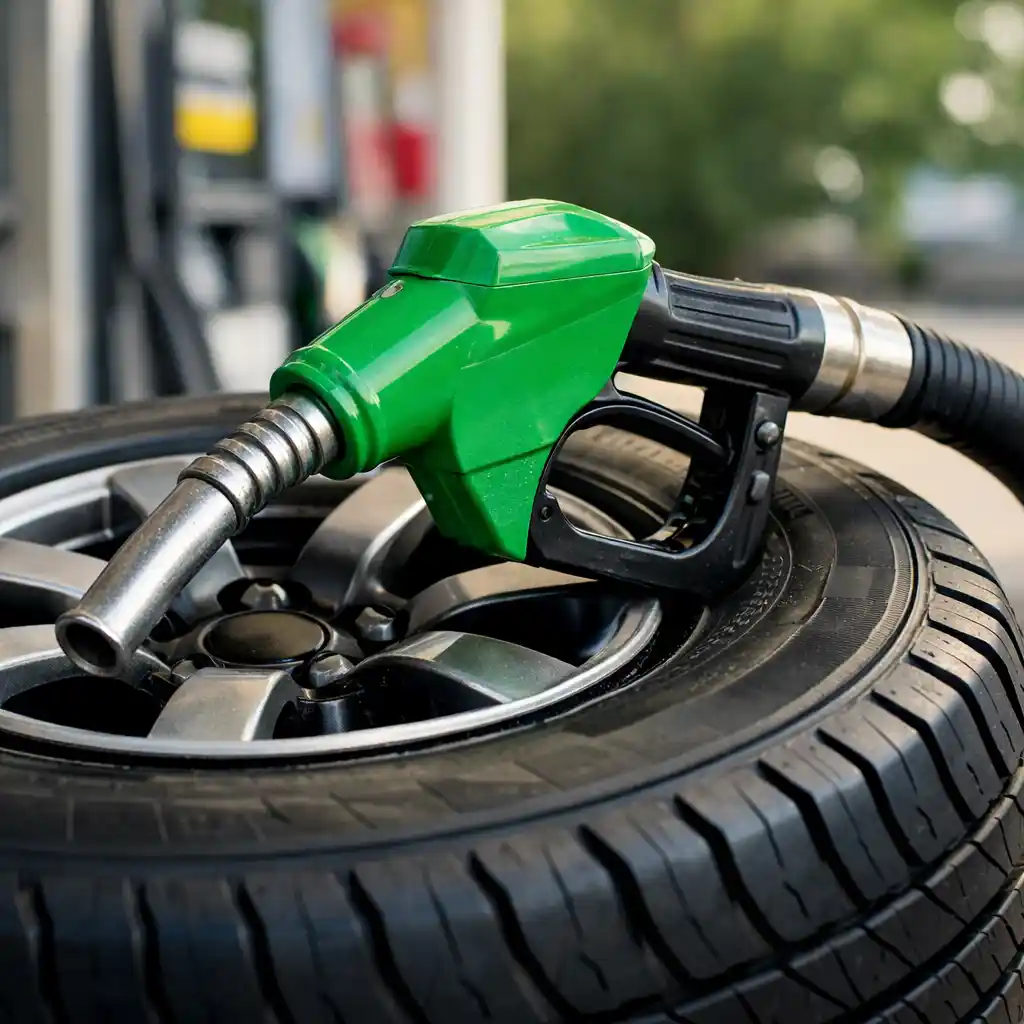
The Phenomenon of Hysteresis
To understand why some tires save gas and others waste it, we must understand Hysteresis. When a tire rotates, the section touching the road deforms (flattens) under the car's weight. As the wheel turns, that section lifts off and snaps back to its original shape.
[Image of viscoelastic hysteresis loop diagram in rubber materials]This constant cycle of deformation and recovery generates heat. In a standard tire, the internal friction between carbon black molecules creates excessive heat, which is essentially wasted energy from your fuel tank. This is viscoelastic energy loss.
The LRR Solution: Engineers have minimized hysteresis by altering the molecular structure of the tread compound. By reducing the internal friction, the tire returns to its shape faster and cooler, requiring less force (and less gas) to keep rolling.
Silica-Silane Coupling: The Magic Bond
The breakthrough in modern **tire ratings** for efficiency came with the introduction of High-Dispersion Silica. Unlike Carbon Black, silica doesn't naturally bond well with rubber polymers. To fix this, chemists use "Silane Coupling Agents"—chemical bridges that bond the silica to the rubber.
Old Tech: Carbon Black
Cheap and durable, but generates high internal friction. The carbon particles rub together, creating heat that robs you of MPG.
New Tech: Silica + Silane
Creates a strong but flexible molecular network. It reduces rolling resistance by 20% while actually improving wet grip. A win-win.
Aerodynamics & Mass Reduction
It's not just chemistry; it's physics. Premium LRR tires are engineered to be lighter. Reducing the "Unsprung Mass" (the weight of wheels and tires) has a multiplier effect on efficiency. A tire that is 3 lbs lighter requires significantly less torque to accelerate.
Furthermore, sidewall aerodynamics play a role. The Michelin Energy Saver series features smoothed sidewall lettering to reduce air turbulence at highway speeds, a technique borrowed from Formula E racing.
🏆 The Efficiency King:
For pure fuel savings, the Michelin Energy Saver A/S remains the benchmark. Its proprietary "EnergySaver Construction" creates the lowest rolling resistance coefficient ($C_{rr}$) in its class, verified by independent dyno testing.