EV Tire Guide: Why Teslas & Rivians Eat Rubber
Welcome to the electric revolution. If you've recently switched to an EV—whether it's a Tesla, Rivian, Hyundai Ioniq, Kia EV6, or any other—you've likely noticed two things: breathtaking acceleration and tires that seem to vanish before your eyes. In this Tire.Guide masterclass, we explain the brutal physics behind EV tire ratings and why traditional tire logic no longer applies.
EVs are not just "normal cars without exhaust pipes." They are heavier, deliver torque differently, and interact with their tires in a way that internal combustion engine (ICE) vehicles never did. If you try to treat your EV like a regular car when it comes to tires, you will burn through rubber, range, and money at an alarming rate. This chapter lays the foundation: weight, torque, and how they conspire to eat your tread.
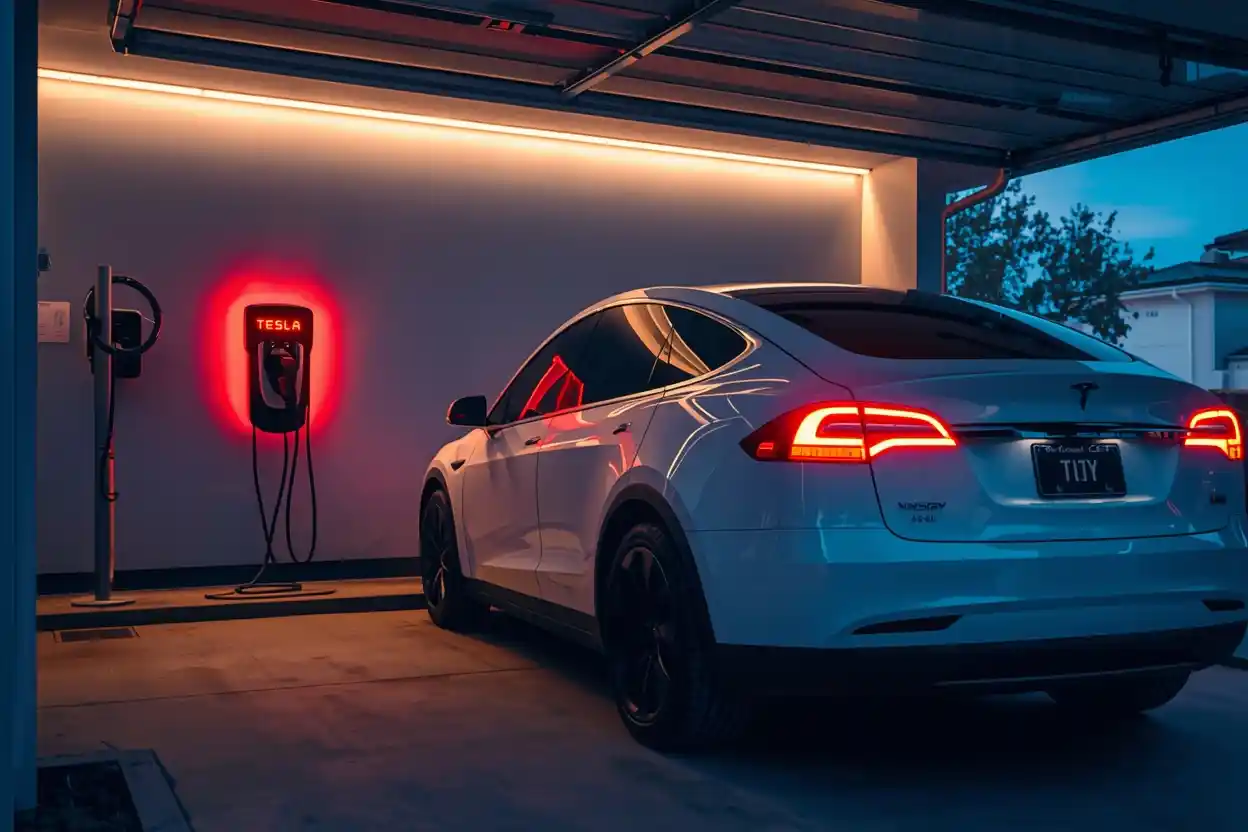
The two silent killers: Weight & torque
Electric Vehicles (EVs) are fundamentally different from Internal Combustion Engine (ICE) vehicles. A Tesla Model X or a Rivian R1S can weigh up to 30–40% more than a gasoline SUV of the same size. This is due to the massive lithium-ion battery packs sitting in the floorpan, the reinforced structure around them, and the additional cooling and electronics hardware.
On any tire rating chart, weight is a primary factor in treadwear. The heavier the vehicle, the more force each tire must support during acceleration, braking, and cornering. But weight is only half the story. EVs deliver 100% of their torque at 0 RPM. There is no build-up, no delay, no gradual swell of power. Every time you launch from a green light, your tires are subjected to a massive "shearing" force that literally grinds the rubber away at a microscopic level.
Standard tires simply weren't built for this level of abuse. They were designed for vehicles with engines that build torque gradually and weigh significantly less. When you bolt them onto a high-torque EV, you are asking them to do a job they were never engineered to handle. The result: rapid shoulder wear, overheating, and a noticeable drop in performance long before the tread is technically "worn out."
🏎️ The torque trap
Even if you don't "floor it," the regenerative braking system in EVs creates constant back-and-forth stress on the tire's contact patch. You accelerate hard with instant torque, then you decelerate aggressively with regen. This "seesaw" effect accelerates wear in a way that gasoline cars never experience, especially on the driven axle.
How EV torque destroys traditional tread patterns
Traditional tread patterns and compounds were optimized for a world where torque delivery was smoother and more progressive. EVs, especially performance models like the Tesla Model 3 Performance or Kia EV6 GT, can deliver sports-car-level acceleration repeatedly, silently, and with no mechanical drama. The tires, however, feel every Newton-meter.
Under heavy EV acceleration, the leading edge of each tread block is hammered into the asphalt. Over time, this creates a "sawtooth" wear pattern, where one side of the block is rounded and the other is sharply worn. This not only reduces grip but also increases noise and vibration. On a tire rating chart, this type of wear is a clear sign that the tire compound and construction are mismatched to the vehicle's torque profile.
Instant load spikes
Each time you press the accelerator, the tire must instantly transmit full motor torque to the road. There is no torque converter, no gear change delay, no turbo lag. This creates sharp load spikes that stress the rubber and internal belts.
Reverse shearing forces
Regenerative braking reverses the torque direction through the drivetrain. The same contact patch that was just pushing the car forward is now being used to slow it down, often with significant force. This back-and-forth shearing accelerates micro-tears in the rubber.
Center of gravity, cornering, and camber wear
EVs typically have a very low center of gravity because the battery pack is mounted in the floor. This is great for handling and stability, but it also means that lateral forces in corners can be higher than in a comparable ICE vehicle. The tires are asked to generate more grip, more often, and for longer durations.
Many EVs are tuned with slightly more aggressive camber settings to improve cornering stability. Combined with the extra weight, this can lead to accelerated inner shoulder wear if alignment and tire pressures are not carefully maintained. Owners often discover this too late—when the inner edge is down to the cords while the outer tread still looks acceptable.
⚠️ Hidden danger: "Looks fine from the outside"
On many EVs, the inner shoulder of the tire wears much faster than the outer edge. A quick glance from the side of the car can be misleading. Always inspect the inner tread by turning the steering wheel fully or using a flashlight and mirror.
Must-have gear: EV pressure management
Because EVs are so heavy, maintaining the correct PSI is critical to prevent sidewall collapse, overheating, and rapid wear. Under-inflation on an EV is far more punishing than on a lighter ICE vehicle. The extra mass flexes the sidewalls more, generating heat and increasing rolling resistance, which in turn reduces range.
Most EVs run higher recommended pressures than their ICE counterparts—often in the 42–48 PSI range. This is not an accident; it is a necessity to keep the tire structure stable under load. A high-volume, reliable inflator is not just a convenience for EV owners; it is a core part of the maintenance toolkit.
Shop EV Inflators on Amazon ➝🔍 EV-specific pressure checklist
- Check monthly: EVs are sensitive to small pressure changes; 2–3 PSI can affect range and wear.
- Adjust for load: If you frequently carry passengers or cargo, use the higher "full load" pressures.
- Monitor TPMS but don't rely on it blindly: TPMS often warns only when pressure is significantly low.
- Re-check after big temperature swings: A cold snap can drop pressures enough to trigger extra wear.