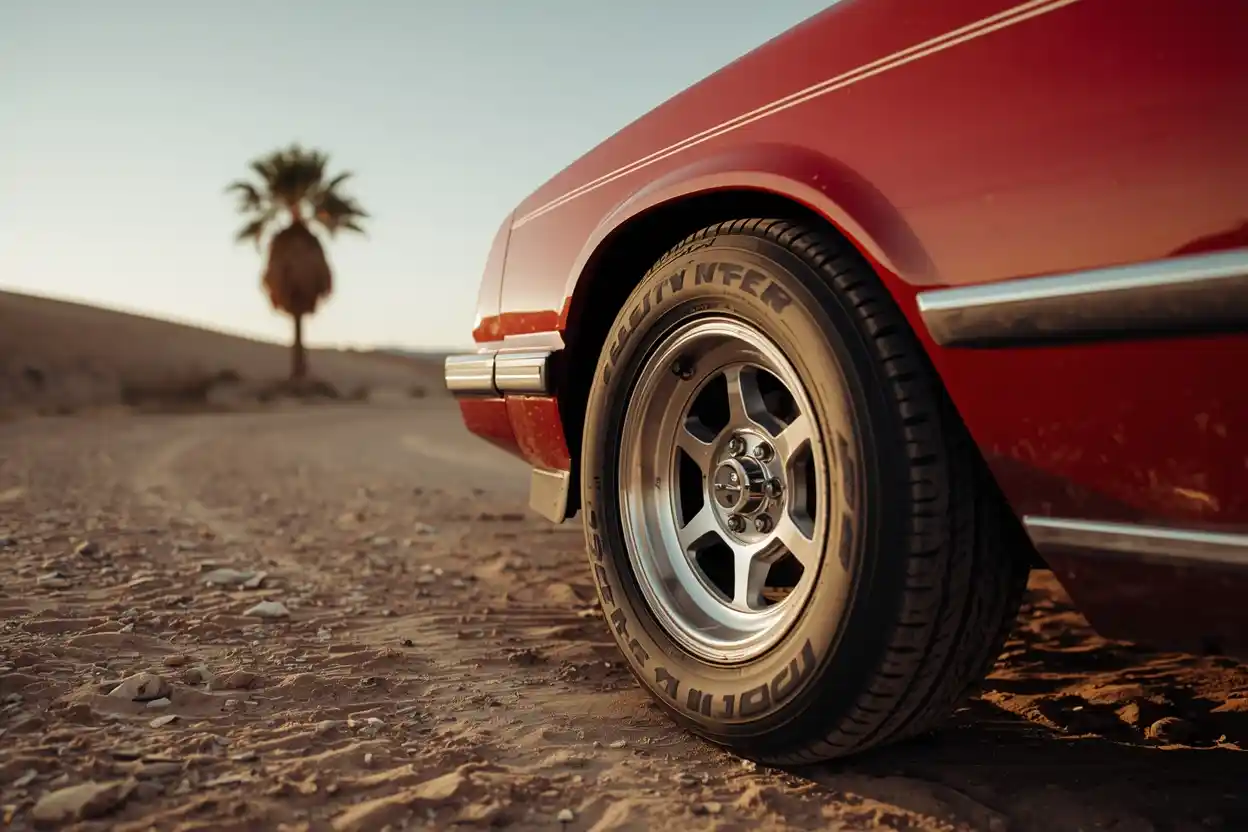
In states like Arizona, Texas, and Nevada, summer isn't just a season—it's an endurance test for your vehicle. While most of the USA worries about snow and ice, desert drivers face a silent, invisible killer: Thermal Degradation.
If you're driving on standard "All-Season" tires in 110°F+ heat, your rubber is undergoing a chemical change that could lead to a catastrophic blowout long before the tread actually wears down.
The 160°F Asphalt Reality
When the ambient temperature hits 110°F, the black asphalt beneath your wheels can soar to 160°F or higher. Standard all-season compounds are designed to stay flexible in near-freezing temperatures. In extreme heat, these same compounds become "over-cured," turning brittle and losing their ability to grip the road. This is why "all-season" is often a myth in the desert.
1. The UTQG Temperature Rating: Your Secret Weapon
Every tire sold in the USA has a "Temperature" grade stamped on the sidewall. In the Sun Belt, anything less than an "A" rating is a dangerous gamble.
| Grade | Heat Dissipation Capability | Safe Speed at Max Temp |
|---|---|---|
| Grade A | Maximum (Best for AZ, TX, NV, FL) | Over 115 mph |
| Grade B | Moderate | 100 - 115 mph |
| Grade C | Minimum (AVOID in hot climates) | 85 - 100 mph |
2. Why Desert Tires "Dry Rot" in Just 3 Years
In high-UV regions, tires don't usually die from high mileage; they die from oxidation. The intense sun and low humidity leach the anti-ozonant chemicals out of the rubber. Look for tiny spider-web cracks on your sidewall—that’s dry rot, and it means the tire is no longer structurally sound.
Get UV Tire Protectant on Amazon
Best Tires for Extreme Heat (2026 Picks)
The Summer Champion: Michelin Pilot Sport 4S
Despite being labeled a "summer" tire, in the Sun Belt, this is often the best year-round choice. Its high-silica compound is specifically designed to maintain integrity at high temperatures where all-season tires start to "grease" and slide.
Shop Michelin Pilot Sport 4SThe Touring King: Continental ExtremeContact Sport 02
Continental’s specialized polymers ensure that the tire doesn't lose its shape or braking performance when the pavement is hot enough to fry an egg.
Shop Continental on Amazon3. Essential Desert Tire Maintenance
- Check Pressure in the Morning: Heat increases tire pressure by 1-2 PSI for every 10°F. If you check them in the afternoon, you'll get a false high reading.
- Nitrogen Inflation: Nitrogen molecules are larger and less susceptible to the massive pressure swings caused by desert heat cycles.
- Watch the Color: If your tires are turning a brownish hue ("blooming"), the protective waxes are being forced to the surface by heat. It’s time to inspect them closely.
Conclusion
Don't let the "All-Season" label fool you. In the extreme heat of the American Southwest, your tires are under constant thermal attack. Always verify the Temperature A rating and keep them shielded from UV rays. Your safety—and your wallet—depends on it.