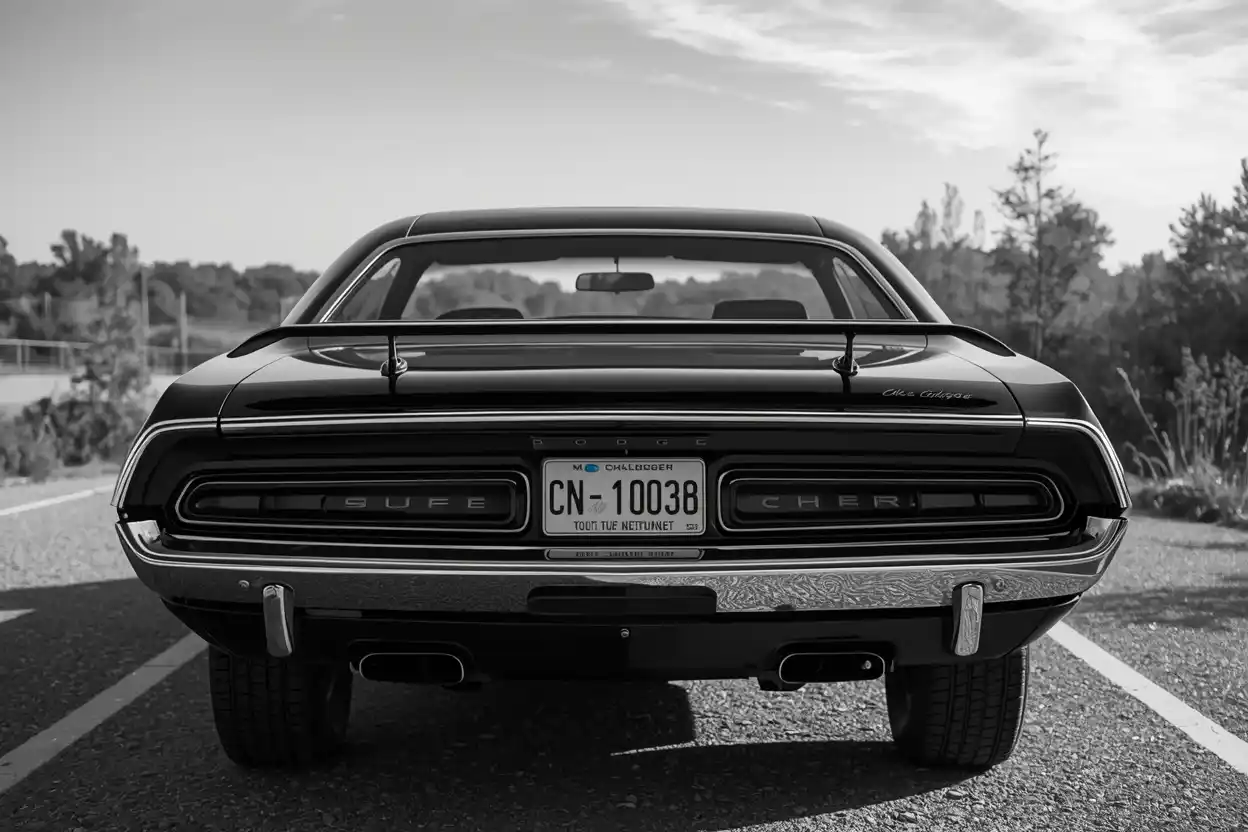
1969 was a pivotal year. Chevrolet redesigned the Camaro from the ground up,
making it wider, lower, and visually more aggressive.
While the wheelbase remained at 108 inches, the engineering beneath the skin transformed the car into a legitimate street-and-strip weapon.
The Super Sport (SS) package was the performance core of the lineup.
1. The Heart: L35 Big Block 396 V8
While the 350 small block sold in greater numbers,
the 396 cubic inch (6.5 L) Turbo-Jet V8 defined the Camaro SS identity.
Its “porcupine” cylinder head design used canted valves to improve airflow,
allowing massive torque at usable RPM.
⚙️ SS396 L35 Factory Specifications
- Displacement: 396 cu in (6,489 cc)
- Bore × Stroke: 4.094 × 3.76 in
- Carburetor: Rochester Quadrajet 4-barrel
- Compression Ratio: 10.25:1
- Horsepower (SAE Gross): 325 hp @ 4,800 rpm
- Torque: 410 lb-ft @ 3,200 rpm
LEADED FUEL DESIGN WARNING
The 396 was designed for high-octane leaded gasoline.
Modern unleaded fuel requires hardened valve seats or lead substitute additives
to prevent valve seat recession, which can destroy your cylinder heads over time.
🔥 Protect Your Valves: Buy Additives
2. Handling the Torque: F41 Suspension Geometry
The SS package included the F41 Heavy Duty Suspension,
adding stiffer front coils, a thicker front sway bar,
and—critically—multi-leaf rear springs to control axle wind-up.
This addressed the severe wheel hop that plagued earlier mono-leaf Camaros.
🛠️ Shop Suspension Upgrade Kits
3. Tires: From Bias-Ply to Radials
Factory D70-14 bias-belted tires were period-correct but traction-limited.
Modern radial tires transform braking, cornering, and stability
without altering the car’s character.
🛞 Recommended Tire Fitment
- Period-correct Upgrade: 235/60R15 Front • 255/60R15 Rear
- Max Practical Front (18"): 245/40R18
🛒 Shop Classic Radial Tires
4. Braking: The Weak Link
Even with optional front discs, 1969 braking performance was marginal.
A dual-reservoir master cylinder is a non-negotiable safety upgrade,
ensuring partial braking capability in the event of hydraulic failure.
🛑 Upgrade Safety: Dual Master Cylinders
4.5 VIN, Trim Tags & Authenticity
The 1969 Camaro uses a 13-character VIN.
Unlike modern vehicles, this VIN does not encode SS, RS, or Z/28 packages directly.
It only defines the base vehicle configuration.
🔍 1969 Camaro VIN Structure
- 1: Chevrolet Division
- 24: Camaro V8 series
- 37: 2-door coupe (67 = convertible)
- 9: 1969 model year
- N: Norwood, OH (L = Van Nuys, CA)
- 500001+: Production sequence number
COMMON MYTH ALERT
There is no such thing as an “SS VIN” on a 1969 Camaro.
SS status was defined by trim tags (Cowl Tags) and original documentation, not the VIN itself.
Trim Tag SS Codes
Look for these codes on the Cowl Tag to verify a true SS:
- X22 — SS package
- X66 — SS with special performance suspension
📚 Get the Restoration Guide
5. Conclusion: Engineering vs Authenticity
From a performance standpoint, the 1969 Camaro is endlessly upgradeable.
Its modular subframe allows modern suspension, brakes, and drivetrains
without structural compromise.
But from an engineering-historical perspective, authenticity is binary.
Horsepower can be built. Suspension can be improved.
Factory identity cannot be recreated.
Want more history? Check out our previous analysis:
Read: 1969 Chevrolet Camaro SS/RS Technical Deep Dive